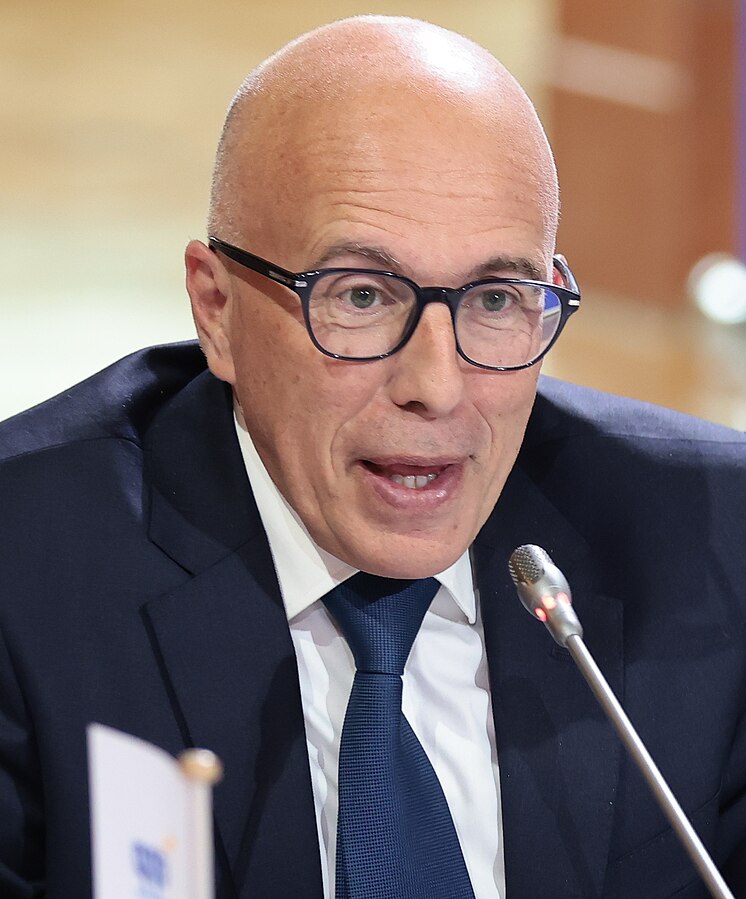
Beyond 5'5": Eric Ciotti's True Stature in French Politics
In the bustling arena of French politics, where personalities often become as scrutinized as policies, few figures spark as much intriguing discussion as Eric Ciotti. A veteran of the conservative Les Républicains party, Ciotti has carved out a distinctive niche through his unwavering convictions and decisive actions. Yet, amidst the debates on national security or economic reform, a peculiar point of interest frequently surfaces: his physical height. While the query "Eric Ciotti Taille" might lead to a simple numerical answer, the true measure of this political heavyweight lies far beyond inches and centimeters. This article delves into how Ciotti's steadfast dedication to public service and his impactful policy-making—particularly his bold RTT reforms—have truly defined his significant stature in shaping France's political landscape.
For those curious about the physical dimensions, Eric Ciotti stands at 1.65 meters, or approximately 5 feet 5 inches. This measurement, often perceived as "modest" or "smaller than average" for a man, frequently sparks conversation. However, focusing solely on this physical trait risks overlooking the formidable presence Ciotti commands in French political discourse. It's a common human tendency to connect physical attributes with capabilities, a bias that can disproportionately affect public figures. Yet, the history of leadership is replete with individuals whose physical stature bore no relation to their monumental impact. Winston Churchill, for instance, was famously short but possessed an oratorical and leadership presence that defined an era.
The fascination with a politician's height underscores a broader societal preoccupation, perhaps linked to archaic notions of dominance or authority. In modern politics, however, true power emanates not from physical bulk but from intellectual acumen, strength of conviction, and the ability to rally support for one's vision. For Eric Ciotti, his physical "Eric Ciotti Taille" is, as one source aptly puts it, merely a "footnote" in a career marked by relentless dedication and a profound influence on national policy. His capacity to navigate complex political waters, champion his conservative ideals, and implement challenging reforms is where his true height in the political sphere becomes evident. This distinction is crucial for understanding any leader: while physical attributes might be a talking point, they are rarely the substance of a lasting legacy.
A Titan of Toughness: Ciotti's Conservative Convictions and Policy Impact
Eric Ciotti's career is a testament to the power of unwavering principles. A prominent member of Les Républicains, he has consistently positioned himself on the right wing of the party, becoming a vocal advocate for law and order, national sovereignty, and fiscal conservatism. His political journey has seen him serve in various capacities, including as a Deputy in the National Assembly for Alpes-Maritimes and as the President of the Departmental Council of Alpes-Maritimes, showcasing a breadth of experience at both national and local levels.
Throughout his tenure, Ciotti has been a leading voice on security issues, pushing for stricter enforcement, increased resources for law enforcement, and a firmer stance on immigration. His focus on these themes resonates deeply with a significant segment of the French electorate, solidifying his reputation as a "tough on crime" politician. Beyond security, Ciotti has consistently advocated for a leaner state and greater fiscal responsibility. He champions policies that aim to reduce public spending, reform the welfare system, and enhance economic competitiveness. His dedication to these conservative ideals is not merely rhetorical; it is translated into concrete actions and proposals that seek to redefine the relationship between the state and its citizens, often through challenging established norms. This commitment to principle, even in the face of opposition, is a hallmark of his political "Eric Ciotti Taille" – a measure of his intellectual and ideological steadfastness.
The RTT Reform: A Defining Moment for Eric Ciotti's Leadership
Perhaps one of the most defining moments that truly showcased Eric Ciotti's political stature and willingness to implement bold, albeit controversial, reforms was his decision to overhaul the RTT (Réduction du temps de travail) system for territorial civil servants in the Alpes-Maritimes department. This move, announced in 2016, ignited a firestorm of protest but also underscored Ciotti's unyielding commitment to his vision of public sector modernization and fiscal prudence.
Under the reform, civil servants in the Alpes-Maritimes saw their RTT days cut dramatically, from 22 to 11, along with a reduction of three additional leave days. The objective was to bring the annual working hours back to the legal standard of 1,607 hours, meaning each agent would work approximately fourteen days more per year, or nearly three extra weeks. This was not a minor adjustment; it was a significant alteration to long-held employee benefits, designed to align the public sector with the realities of modern economic demands.
Ciotti justified these measures with compelling economic arguments. He highlighted the urgent need to reform the departmental institution and realize substantial savings in the face of dwindling state endowments. He pointed out the drastic reduction in state funding, which plummeted from 130 million euros in 2013 to a projected 42 million in 2017, coupled with an increasing gap in compensation for social benefits. For Ciotti, these were not abstract figures but critical financial pressures demanding decisive action. He emphasized that the private sector adapts to economic realities, and the public sector must follow suit.
Predictably, the reform was met with fierce opposition from trade unions, who denounced it as a "coup de force" and felt they were presented with a "fait accompli." They swiftly announced plans for days of action, indicating the depth of resentment. However, Ciotti remained resolute, famously stating, "The time when politicians were only there to distribute lollipops is over." He went further, criticizing the national 35-hour work week, which he attributed to the "loss of 9,000 police officers" and advocated for a "progressive return to 39 hours" across the public sector, citing the situation in hospitals as another example of where such reforms were needed. This reform was not just a local administrative decision; it was a powerful statement of Ciotti's political philosophy, demonstrating his courage to enact unpopular measures for what he believes are the long-term benefits of the public purse and institutional efficiency. The full ramifications and ongoing discussions surrounding these reforms are detailed in
Eric Ciotti's RTT Reform: Impact on French Civil Servants.
Leadership Beyond Physicality: Lessons from Eric Ciotti's Approach
Eric Ciotti's career offers valuable insights into effective leadership, regardless of physical attributes. His approach is characterized by several key traits:
*
Conviction and Consistency: Ciotti rarely wavers from his core conservative principles. This consistency, even when controversial, builds a reputation for reliability and clear ideological positioning. Followers know where he stands, fostering trust among his base.
*
Decisiveness in the Face of Adversity: The RTT reform is a prime example of his willingness to make tough, unpopular decisions for what he perceives as the greater good. Leaders often face choices between short-term popularity and long-term strategic benefits; Ciotti consistently opts for the latter.
*
Strategic Communication: While his actions might be bold, Ciotti is adept at articulating the rationale behind his decisions. He doesn't shy away from explaining the economic pressures or the philosophical underpinnings of his reforms, even when it means confronting entrenched interests.
*
Focus on Substance Over Superficiality: Despite the occasional chatter about his physical height, Ciotti's focus remains squarely on policy, governance, and tangible outcomes. This emphasis on substance is what ultimately defines his influence and respect within French political circles.
For aspiring leaders or indeed anyone observing the political landscape, Ciotti's journey underscores that true influence is cultivated through substance, not appearance. It's about having a clear vision, the courage to pursue it, and the ability to persuade others, even when the path is challenging.
Conclusion
The discussion around "Eric Ciotti Taille" serves as a compelling paradox in the political narrative. While his physical height of 1.65 meters is a simple fact, his political stature is immeasurable. Through his unwavering conservative convictions, his steadfast dedication to public service, and his courage to implement significant, often controversial, reforms like the RTT cuts, Eric Ciotti has indelibly stamped his mark on French politics. His impact transcends mere physical dimensions, demonstrating that true leadership is forged not by height, but by depth of conviction, decisive action, and an unyielding commitment to shaping the national discourse. As a seasoned politician and a formidable voice within Les Républicains, Ciotti continues to prove that genuine influence emanates from the strength of one's ideas and the resolve to see them through, making him a figure whose presence in French political life far exceeds any physical measurement.