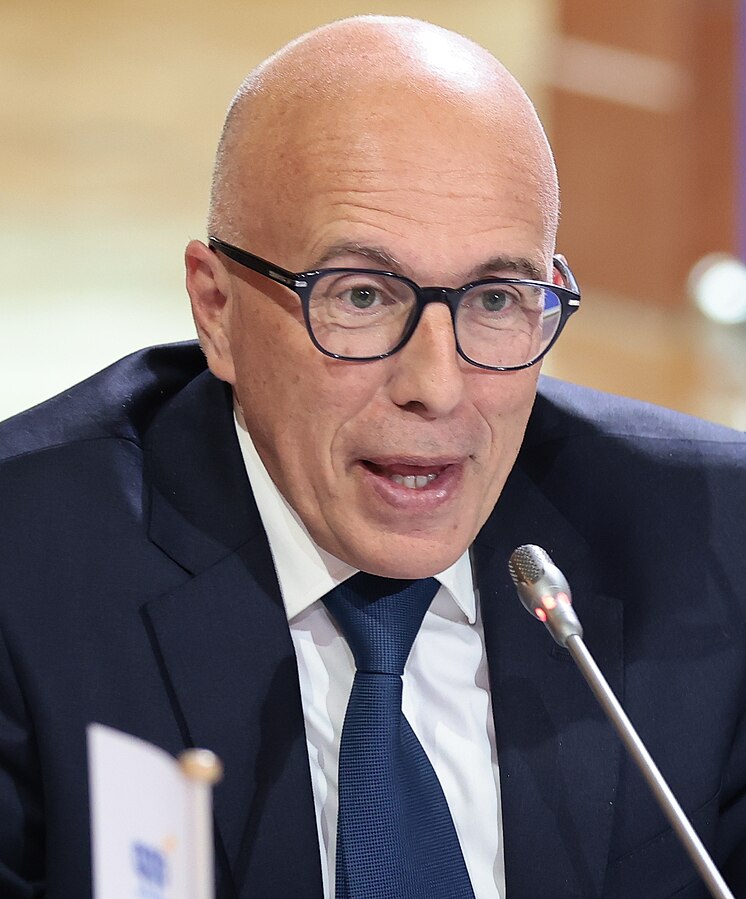
Eric Ciotti Unveiled: His 1.65m Stature & Controversial RTT Cuts
In the dynamic and often tumultuous world of French politics, figures like Eric Ciotti consistently command attention. As a prominent voice for the conservative Les Républicains party, Ciotti's career has been marked by strong convictions and decisive actions. While public interest often veers towards biographical details, including physical attributes like his Eric Ciotti Taille, it is ultimately his policy stances and political resilience that define his true impact. This article delves into both aspects, exploring the curiosity surrounding his 1.65-meter stature and, more significantly, the far-reaching implications of his controversial RTT (Réduction du Temps de Travail) reforms for civil servants.
The Man Behind the Measurements: Eric Ciotti's Physical Stature
One of the intriguing details that often surfaces in discussions about prominent personalities is their physical build. For Eric Ciotti, his height, precisely 1.65 meters (or 5 feet 5 inches), has occasionally been a point of public curiosity. In a society where certain physical ideals might be subconsciously held, some might perceive this stature as being on the more modest side for a man. However, such observations are ultimately superficial and fail to capture the essence of an individual's capabilities or contributions.
It's crucial to underscore that physical dimensions bear no correlation to intellectual prowess, leadership qualities, or political gravitas. Ciotti's long and dedicated career in public service, marked by a steadfast commitment to his ideals and a tenacious approach to policy-making, stands as a testament to this fact. His influence on French politics is demonstrably considerable, proving that true stature emanates from the depth of one's convictions and the impact of one's actions, rather than from mere physical measurements.
Indeed, history is replete with examples of influential leaders who defied physical stereotypes, their legacies forged by their intellect, vision, and determination. Eric Ciotti's journey serves as a contemporary reminder that focusing on superficial attributes distracts from the substantive policy debates and the real work of governance. For a deeper dive into how his political might far outweighs any physical measurement, consider reading Beyond 5'5": Eric Ciotti's True Stature in French Politics.
Reshaping Public Service: Eric Ciotti's RTT Reforms Explained
Shifting focus from physical attributes to policy, Eric Ciotti has spearheaded reforms that have generated significant debate. Most notably, his decision to drastically cut RTT days for territorial civil servants in the Alpes-Maritimes Department has sent ripples through the public sector. RTT, or "Réduction du Temps de Travail," refers to additional days off granted to employees in France to compensate for working more than the statutory 35-hour work week on average.
Under Ciotti's directive as President of the Departmental Council, the number of RTT days for approximately 4,500 agents in Alpes-Maritimes was reduced from a substantial 22 days to a mere 11 days. Furthermore, three days of paid leave were also cut. This pivotal change, announced to take effect from January 1st, aimed to align the working hours of these civil servants with the legal weekly working duration, which translates to 1,607 annualized hours. Previously, these agents worked 1,568 hours annually, meaning the reform effectively required each civil servant to work an additional 14 days per year – nearly three extra weeks.
The motivation behind such a bold move is multifaceted. Ciotti justified the measure as essential for institutional reform and achieving critical economic savings. He argued that the public sector, like private enterprises, must adapt to evolving economic realities and fiscal pressures. This decision was presented not as an isolated incident but as part of a broader strategy of fiscal prudence and administrative modernization that the Departmental Council had been pursuing for years.
The Controversial RTT Cuts: Impact and Reactions
Predictably, the announcement of such significant cuts to established benefits met with strong opposition. Unions representing the territorial civil servants quickly denounced the move as a "coup de force," expressing their outrage at being presented with a fait accompli. They immediately began contemplating various forms of industrial action and protest days to challenge what they viewed as an erosion of acquired advantages.
Ciotti, however, remained resolute, framing the cuts within a larger narrative of necessary austerity and responsible governance. He pointed to prior measures undertaken by the Departmental Council to streamline operations and reduce expenditure. These included:
- Staff Reduction: Since 2009, two out of three retiring civil servants were not replaced, leading to a reduction of 340 positions.
- Budgetary Trimming: Protocol expenses were cut by two-thirds, and communication costs were halved.
Central to Ciotti's justification was the severe financial strain imposed by diminishing state contributions and an increasing burden of social welfare costs. He highlighted the drastic reduction in the state's global operating grant (DGF), which plummeted from €130 million in 2013 to a projected €42 million in 2017. Concurrently, the state's compensation for social benefits has consistently fallen short, creating a cumulative gap of €700 million since 2009 between what the Department pays out and what it receives from the state. Ciotti contends that these social benefits should be compensated "euro for euro" by the national government, underscoring the acute financial pressure on local authorities.
Beyond the Headlines: Ciotti's Broader Economic and Administrative Vision
The RTT cuts are not merely isolated administrative adjustments; they reflect Eric Ciotti's broader conservative philosophy on labor, public service, and economic management. He firmly believes that "enterprises adapt, the public service must adapt." This pragmatic outlook extends to his long-standing critique of the 35-hour work week, a cornerstone of French labor law. Ciotti has previously lambasted the 35-hour week, initiated under Martine Aubry, claiming it led to the "loss of 9,000 police officers" at a crucial time. He consistently advocates for a return to a longer working week, specifically a "progressive return towards 39 hours," citing the challenges faced by the healthcare sector as another example where increased working hours could alleviate pressure.
His political style is often characterized by an unapologetic directness and a willingness to embrace unpopular decisions in the name of fiscal responsibility. Ciotti famously declared, "The time when politicians were only there to distribute lollipops is over." This statement encapsulates his belief that leaders must prioritize difficult but necessary reforms over short-term popular appeasement. It paints him as a leader committed to a vision of a leaner, more efficient public sector, even if it means confronting established norms and union resistance.
From a policy perspective, Ciotti's actions align with a push for greater decentralization of responsibility, where local entities are given more autonomy but also expected to manage their budgets with greater rigor in the face of national fiscal constraints. His approach mirrors a wider debate in France about the role and size of the state, the sustainability of public benefits, and the competitiveness of the French economy in a globalized world.
Conclusion
Eric Ciotti's journey in French politics is a compelling narrative of unyielding conviction. While his physical height of 1.65 meters may attract fleeting curiosity, it is his formidable political stature and his willingness to tackle challenging reforms that truly define him. The RTT cuts in Alpes-Maritimes, though highly contentious, exemplify his commitment to fiscal responsibility and his vision for a more adaptable public service. His stance on issues like the 35-hour work week and his call for a return to longer hours underscore a consistent conservative philosophy aimed at strengthening the French economy and state finances. Ciotti continues to be a pivotal, albeit often polarizing, figure whose actions and words resonate deeply within the ongoing discourse about France's administrative and economic future, proving that true impact is measured not in centimeters, but in courage and conviction.